
Eritrea: Longstanding Commitment to Social Development and Social Justice
By : - Bana Negusse

Each year on 20 February, the world marks World Day of Social Justice, a global observance established by the United Nations to highlight the importance of fairness, equality, and solidarity in building peaceful and inclusive societies.
This year’s theme, “Renewed Commitment to Social Development and Social Justice,” follows the recent Second World Summit for Social Development in Doha and the adoption of the Doha Political Declaration. It reinforces a shared global responsibility: to eradicate poverty, expand access to decent work, strengthen social protection systems, and promote equitable distribution of resources. At its core, social development aims to build “a society for all” – one grounded in justice, equality, solidarity, and respect for human rights.
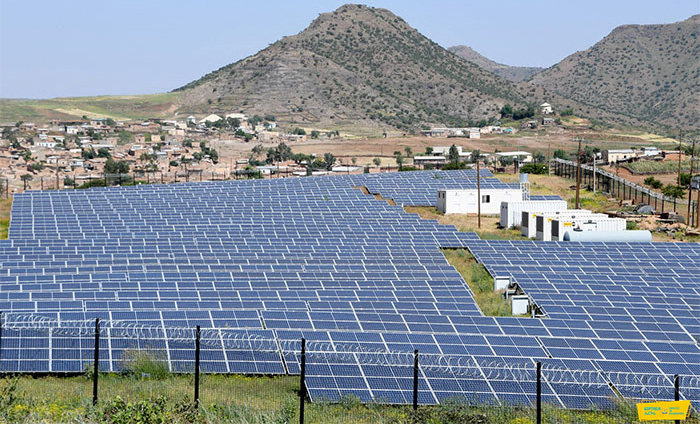
These broader insights are reflected in Eritrea’s own historical trajectory. Social justice was a central pillar of the country’s thirty-year liberation struggle (1961–1991). The Eritrean People’s Liberation Front (EPLF) fought not only for independence but also for social transformation, which was reflected in its establishment of clinics, mobile health services, literacy campaigns, land reforms, and gender equality initiatives. Notably, women made up more than one-third of EPLF members, serving in combat and leadership roles, reflecting an explicit commitment to gender equity. These initiatives laid the groundwork for post-independence policies.
Eritrea’s 1994 National Charter reaffirmed social justice as a guiding principle of nation-building, emphasizing equitable distribution of wealth, services, and opportunities, with special attention to historically disadvantaged segments of society. In practice, this translated into prioritizing rural and historically marginalized regions, countering the urban bias common in many developing countries. Investments focused on expanding schools, health facilities, roads, water systems, and mobile healthcare services to communities in remote locations.
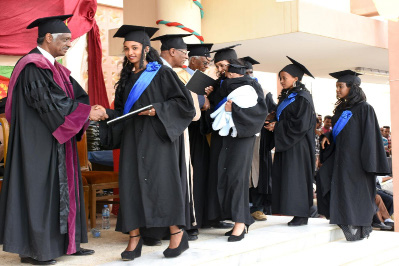
Education became a central pillar of this equity-driven approach. Schooling is free at all levels, with targeted efforts to reach nomadic and rural populations through mobile teacher units and boarding schools. The mother-tongue education policy implemented in elementary schools, which is provided in all nine national languages, has promoted inclusion and reduced linguistic marginalization. Literacy rates have risen sharply following independence, and the gender gap in youth literacy has nearly closed, reflecting sustained investment in equitable access to schools.
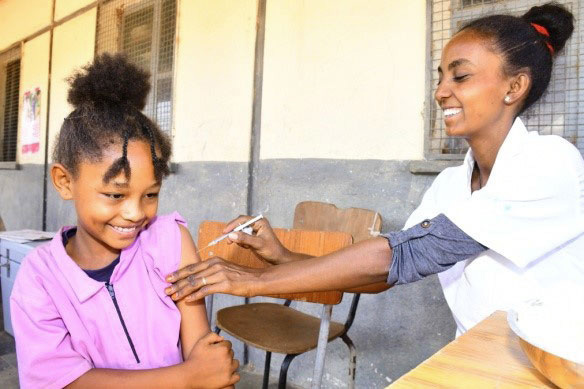
Health policy has followed similar principles of universal access and prioritization of the historically underserved. The expansion of clinics and community-based “barefoot doctors,” heavily subsidized services, and nationwide immunization campaigns has contributed to dramatic reductions in child and maternal mortality, declines in infectious diseases, and significant gains in life expectancy. These outcomes illustrate how equity-focused public health strategies can yield measurable improvements even in resource-constrained settings.
Gender equality has likewise remained central to Eritrea’s social justice agenda. Discriminatory colonial-era laws were repealed, harmful practices criminalized, and women’s rights strengthened across areas such as nationality, land ownership, labour, and political participation. Institutional measures – including affirmative action in higher education – aim to ensure representation and opportunity.
National unions and gender action plans further operationalize these commitments.
 Beyond sectoral policies, Eritrea’s social justice framework has also shaped state-building and social cohesion. By emphasizing equitable service delivery across ethnic, linguistic, and religious lines, alongside maintaining inclusive language policies, the state has sought to prevent the “horizontal inequalities” that research links to conflict. Investments in infrastructure and social protection programs targeting vulnerable groups across regions have reinforced perceptions of fairness and shared national inclusion.
Nonetheless, significant challenges persist. A volatile regional environment and continued illegal unilateral sanctions and other coercive economic measures have strained resources. Additionally, deeply rooted cultural norms can slow progress toward gender equality and education.
Taken together, Eritrea’s experience highlights both the progress that can be achieved and the sustained commitment required to advance social justice in challenging circumstances. Over the past three decades, efforts to prioritize equality, inclusion, and shared development have contributed to gains in health, education, gender equality, and social cohesion.
As the world marks World Day of Social Justice, Eritrea’s story offers a clear lesson: building a just society is a continuous process. The work does not end with policy declarations or measurable gains; it continues through a steady commitment to fairness, opportunity, and dignity for all.